
Bata Mahadeva Mandira Bhubaneswar: Real-Time Darshan Guide

12 min read
22 April 2026

The morning sun hits the red laterite stone of Old Town and somewhere near Bindusagar, a shopkeeper walking to his dukan pauses without thinking. He folds his hands toward a small shrine barely waist-high, pours a few drops of water from a plastic bottle on a Shiva lingam, and walks on. This is Bata Mahadeva. No grand gopuram. No ticket counter. No queue. Just a living piece of faith that Bhubaneswar has carried on its streets for five hundred years.

Quick Info

  • Timings: 5:00 AM to 9:00 PM (open always, no gate)

  • Entry Fee: Free

  • Best time to visit: 6:00 AM to 7:30 AM or 5:30 PM to 7:00 PM

  • Location: Old Town, Ekamra Kshetra, near Bindusagar Lake, Bhubaneswar

  • Nearest Landmark: Walkable from Lingaraj Temple west gate, roughly 400 meters


Kimbadanti: The Story That Old Town Tells Itself

In Odia, the word "Bata" means road or path. Bata Mahadeva is literally "the Mahadeva on the road." There is an old saying in the lanes of Ekamra Kshetra that Lord Shiva does not always sit inside a massive temple with a thousand priests. Sometimes he sits by the side of the path where tired walkers rest, where milkmen tie their cows, where children playing cricket accidentally hit a ball near the lingam and immediately say "Hara Hara Mahadev" before picking it up.

The local belief goes that during the 15th or 16th century, when the Gajapati kings were building and renovating temples across Bhubaneswar, a stone mason found a naturally formed Shiva lingam near the road leading to Bindusagar. He tried to move it to a workshop for carving. The stone would not budge. He brought more workers. It stayed fixed to the ground. That night, the mason dreamt of an old ascetic with matted hair who told him, "I stay here. On this path. Where people walk past me every day. Do not move me." The next morning, a small shrine was built around the lingam right there. That shrine is what we now call Bata Mahadeva.

Elderly people in the Old Town area will tell you this story with absolute conviction. They will also tell you that during the cyclone of 1999, when massive trees fell and roads flooded, this small roadside shrine did not lose a single brick. Whether that is true or not, the story itself shows how deeply this little temple lives in the local memory. Grandmothers still tell their grandchildren to fold their hands when they pass a Bata Mahadeva, even if they are in a hurry to catch a bus from Badambadi.

There is another layer to this folklore. In the Shaiva tradition of Odisha, Shiva is not just a deity inside a sanctum. He is present in the stones you walk on, in the peepal tree by the lake, in the cow that blocks your scooter on a narrow lane. Bata Mahadeva represents exactly this idea. He is on your path. You do not need to plan a special trip. You do not need to pay for a special darshan ticket. You just need to notice him while walking.

This is also why you will find small Bata Mahadeva shrines all over Bhubaneswar, not just in Old Town. But the one near Bindusagar is considered the original and the most powerful. Pilgrims who come for the Ekamra Yatra, the traditional circumambulation of all major temples in the Old Town, make it a point to stop here. Missing Bata Mahadeva in the yatra is considered incomplete by local pandas.

Location and How to Reach

Reaching Bata Mahadeva requires you to enter the maze that is Old Town Bhubaneswar. If you are coming from the Acharya Vihar side, take the road toward Kalpana Square, then turn toward Kalpana Chhak. From there, ask any auto driver for "Lingaraj Temple road." Do not try to drive your own car into the Old Town lanes. You will get stuck behind a tempo carrying flowers, a handcart with clay pots, and a cow that has decided to sit in the middle of the road. Park near the Lingaraj Temple parking area near the market complex and walk.

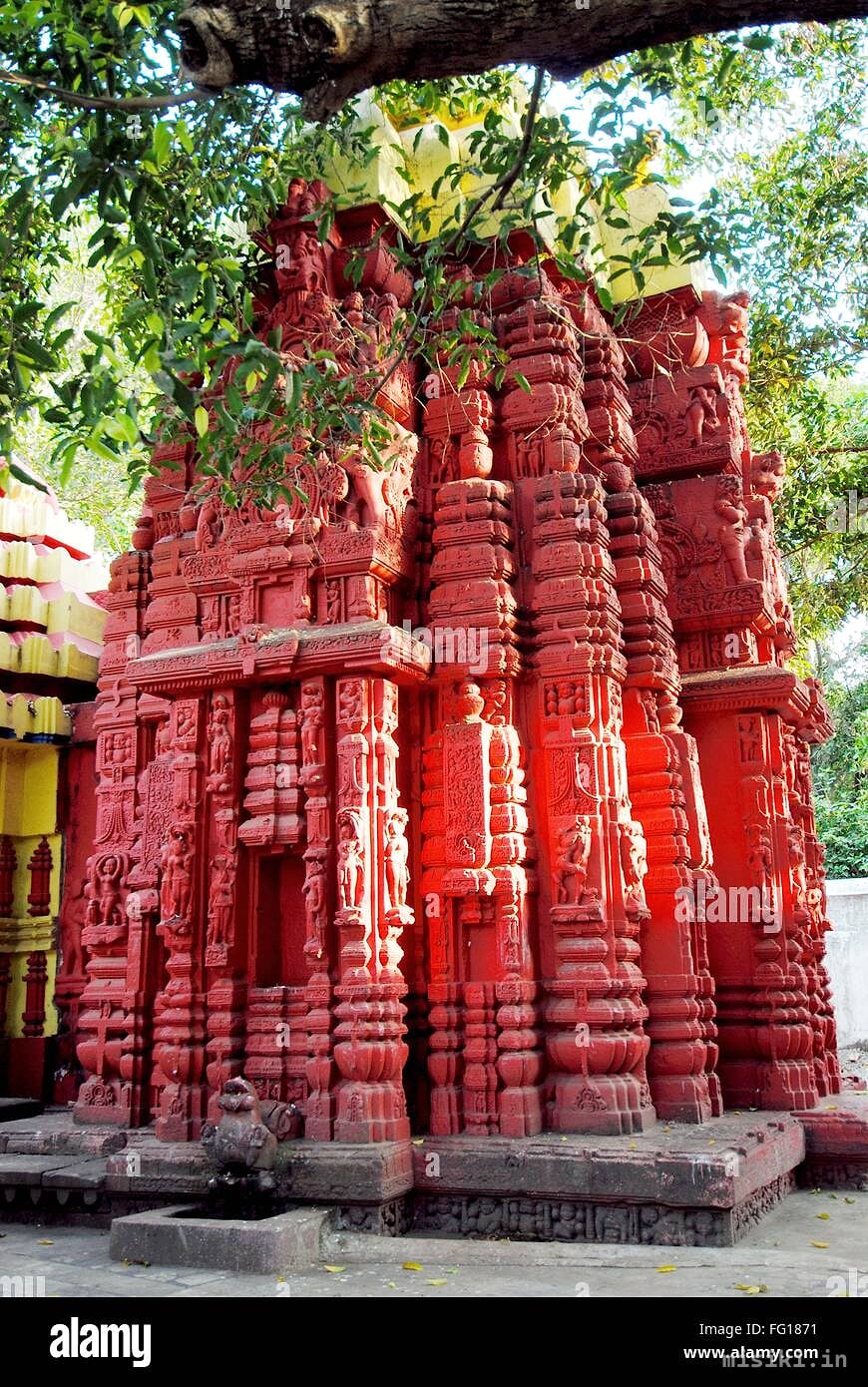
From the Lingaraj Temple west gate, walk toward Bindusagar. You will pass sweet shops selling chhena poda and dahi bara. You will cross a small Hanuman temple on the left. About four hundred meters down this lane, look to your right near a slight bend in the road. There is a raised platform, laterite stone, with a small shikhara on top. That is Bata Mahadeva. Many people walk past it without realizing because it does not look like a "big temple." Look for the small flag on top and the red sindoor marks on the boundary wall.

If you are coming from the Master Canteen side, take an auto directly to Bindusagar. The fare should be around forty to fifty rupees in 2026. Tell the driver "Bindusagar bandh paas re utheiya" which means "drop me near Bindusagar lake." From the lake, it is a two minute walk.

The entire area around the temple is narrow. There are no wide footpaths. You will walk on the road itself, dodging two-wheelers. Wear chappals or sandals that you can easily remove, because you will need to take them off before stepping onto the platform.

Vibe and Atmosphere

The atmosphere around Bata Mahadeva changes completely depending on what time you visit. Early morning, around six, the lane is barely awake. A few pandas from Lingaraj are walking toward the main temple with brass kalashas. The air smells of damp earth, incense from nearby shrines, and the faint smell of mustard oil from someone making breakfast in a back lane. The temple platform is cool under your bare feet. The laterite stone holds the night temperature. A single diya might still be burning from the previous evening. The silence is real. Not the silence of an empty place, but the silence of a place that has not yet started its noise.

Come back at five in the evening and the scene flips. The lane is packed. You have devotees returning from Lingaraj, shopkeepers closing their shutters, school children in uniforms walking home, and tourists who are lost and trying to find their way back to the main road. The small space around Bata Mahadeva gets crowded with five or six people at a time trying to offer water, bel patra, and flowers. Someone is ringing a small bell. A panda sitting on the steps is chanting something. A flower seller has spread her marigolds right next to the temple steps. It is chaotic but in a very familiar Bhubaneswar way. Nobody is pushing. Nobody is shouting. It is just dense.

At night, after eight, the crowd thins again. A single bulb lights up the lingam. The lane gets dark because Old Town does not have the brightest streetlights. The temple looks different at night. The shadows on the stone carvings make the reliefs look alive. If you stand there for a few minutes, you can hear the distant bells of Lingaraj and sometimes a group of devotees singing bhajans from a nearby house.

Peace of Mind and Spiritual Experience

There is a specific reason locals go to Bata Mahadeva when they are stressed. It has no formal puja structure. There is no priest demanding a specific dakshina amount. There is no queue with a numbered token. You walk up, you pour water on the lingam, you close your eyes for thirty seconds, and you walk away. That simplicity itself is the spiritual experience.

If you want to sit quietly, there is a small space on the left side of the platform where a stone bench exists. It is worn smooth by years of people sitting on it. Sit there for ten minutes in the early morning. You will notice the pigeons on the neighboring roof. You will hear the sound of water being drawn from a hand pump somewhere behind a house. The peace here is not organized or marketed. It is accidental, the kind that exists in old Indian neighborhoods where life moves at a human pace.

Students who come to study at the nearby Sanskrit pathshalas often sit here before exams. They believe that Bata Mahadeva, being a simple and accessible form of Shiva, grants clarity of mind. Whether this works or not, the act of sitting quietly for ten minutes before an exam probably helps more than last minute cramming.

Enjoy the Place Type

For architecture enthusiasts, Bata Mahadeva is a study in what 15th to 16th century minor temple architecture looked like in Odisha. The main shrine has a pidha order rekha deul, which is the curvilinear tower style typical of Kalinga architecture but on a much smaller scale. Look at the base of the temple. There are khakhara mundis, the decorative motifs, carved into the laterite. They are weathered now but still visible. The niches on the outer walls would have once held images of Parsvanatha or other subsidiary deities. Most are empty now.

For families visiting from outside Bhubaneswar, this is a good quick stop during the Old Town temple circuit. You do not need an hour here. Ten minutes is enough. Combine it with Bindusagar, Lingaraj, and Ananta Vasudeva. Keep your children close because the lane has two-wheeler traffic.

Solo travelers who like photographing old stone and quiet corners will find good frames here. The play of light on the laterite in the late afternoon is worth capturing. Just be respectful. Do not point your camera directly at devotees offering prayers. No one will stop you, but it is bad manners.

Belief and Local Significance

For Bhubaneswar locals, Bata Mahadeva serves a very specific purpose. It is the temple you visit when you cannot visit a big temple. If someone in the family is unwell and you cannot make it to Lingaraj, you go to Bata Mahadeva because it is closer, faster, and does not require elaborate arrangements. If you are about to buy a new vehicle, you bring a small coconut, break it here, and drive away. It handles the everyday spiritual needs of the neighborhood.

There is also a belief related to journeys. Before leaving Bhubaneswar for a long trip, especially to Puri or beyond, some families stop at Bata Mahadeva on the way out of Old Town. The logic is simple. Mahadeva sits on the path. You seek his blessing before you start walking your path. The word "Bata" connects the road outside to the road of life itself.

Pandas of the area say that during Shivaratri, despite the massive crowds at Lingaraj, a steady stream of people keeps coming to Bata Mahadeva through the night. The offerings here are simpler. Water, bilva leaves, sometimes just a flower picked from a nearby tree. There is no competition for the best view or the closest spot.

Energy and Vibrations

The energy at Bata Mahadeva is not the heavy, overwhelming kind you feel at Lingaraj Temple where thousands of people are chanting and bells are ringing non-stop. This is a quieter energy. Steady. Like the low hum of a ceiling fan in an old Odia house. The lingam itself is not very large. It is a dark stone, smooth from years of water being poured on it. There is no silver covering, no gold ornamentation. It is raw stone. When you stand in front of it, especially when no one else is around, you feel a sense of stillness that is hard to explain.

Some people who meditate say that small roadside temples in Odisha have a particular grounding energy because they are connected to the earth directly. Bata Mahadeva sits on a raised laterite platform but the stone itself feels like it grew out of the ground rather than being placed there. Whether you believe in energy or not, standing barefoot on cool laterite at six in the morning in Old Town Bhubaneswar is an experience that calms the nervous system.


Nearby Temples in Old Town Bhubaneswar

Name

Area

Price

Rating

Best For

Lingaraj Temple

Old Town

Free

4.8

Major pilgrimage, architecture

Ananta Vasudeva Temple

Old Town

Free

4.5

Vaishnava heritage, morning darshan

Mukteswar Temple

Old Town

25 rupees

4.7

Stone arch, photography

Siddheswar Temple

Old Town

Free

4.3

Quiet darshan, evening visit

Bata Mangala Temple

Pipili road

Free

4.4

Quick stop, safe travel blessing

Bata Mahadeva

Near Bindusagar

Free

4.2

Roadside worship, no rush


Frequently Asked Questions

What are the darshan timings for Bata Mahadeva?
The shrine is open from around 5:00 AM to 9:00 PM. There is no formal closing or opening ceremony. You can visit anytime during these hours.

Is there any entry fee or ticket for Bata Mahadeva?
No. It is completely free. There is no ticket counter, no counter at all actually.

Can I take photos inside Bata Mahadeva temple?
Yes, photography is allowed. There is no restriction. But avoid using flash and do not photograph people who are praying without their permission.

Is there a parking facility near Bata Mahadeva?
There is no dedicated parking for this temple. Park your vehicle at the Lingaraj Temple market parking area and walk about four hundred meters. Two-wheeler parking along the lane is risky because the road is narrow and traffic is heavy.

Is there a shoe stand at Bata Mahadeva?
No. There is no official shoe stand. You leave your footwear on the road beside the platform. Locals just leave their chappals and walk in barefoot. In Old Town, this is normal. Nobody touches your shoes.

Can I pay for puja materials using UPI at Bata Mahadeva?
There is no official puja counter here. The flower sellers sitting nearby usually accept UPI. You can buy bel patra, flowers, and a small pot of water from them for twenty to thirty rupees and scan their phone for payment.

What should I wear when visiting Bata Mahadeva?
There is no strict dress code enforced here unlike Lingaraj Temple where dhotis are mandatory for men entering the main sanctum. But since you are in Old Town, wear modest clothes out of respect. Avoid shorts and sleeveless tops.

Is Bata Mahadeva safe for solo female travelers?
Yes. The lane near Bindusagar stays populated throughout the day. During early morning and late evening, it gets quieter but is generally safe. Old Town has a residential character. People are around. Use normal city caution.

Can I visit Bata Mahadeva during Shivaratri?
Yes, and many locals do. The shrine stays open through the night. There will be a steady flow of devotees. But if you want to avoid the extreme rush, visit a day before or after Shivaratri.

How much time should I spend at Bata Mahadeva?
Ten to fifteen minutes is enough. It is a small shrine. Offer your prayers, sit for a moment if you like, and move on to other temples in the circuit.

Is there a problem with monkeys near Bata Mahadeva?
Not specifically at this spot. Monkeys are more common near the Lingaraj Temple complex. At Bata Mahadeva, you might see a cow or a dog resting nearby, which is standard for Old Town lanes. Do not carry food in your hand openly.

What is the difference between Bata Mahadeva and a regular Shiva temple?
Bata Mahadeva is specifically a roadside shrine. There is no inner sanctum pathway, no massive hall, no designated priest for elaborate rituals. It is designed for quick, passing worship. The word "Bata" means road, which defines its purpose. You worship while walking your path.

About this Guide

This guide was curated by the Misiki editorial team. We visit local spots, talk to residents, and verify details to bring you the most authentic recommendations in bhubaneswar.