
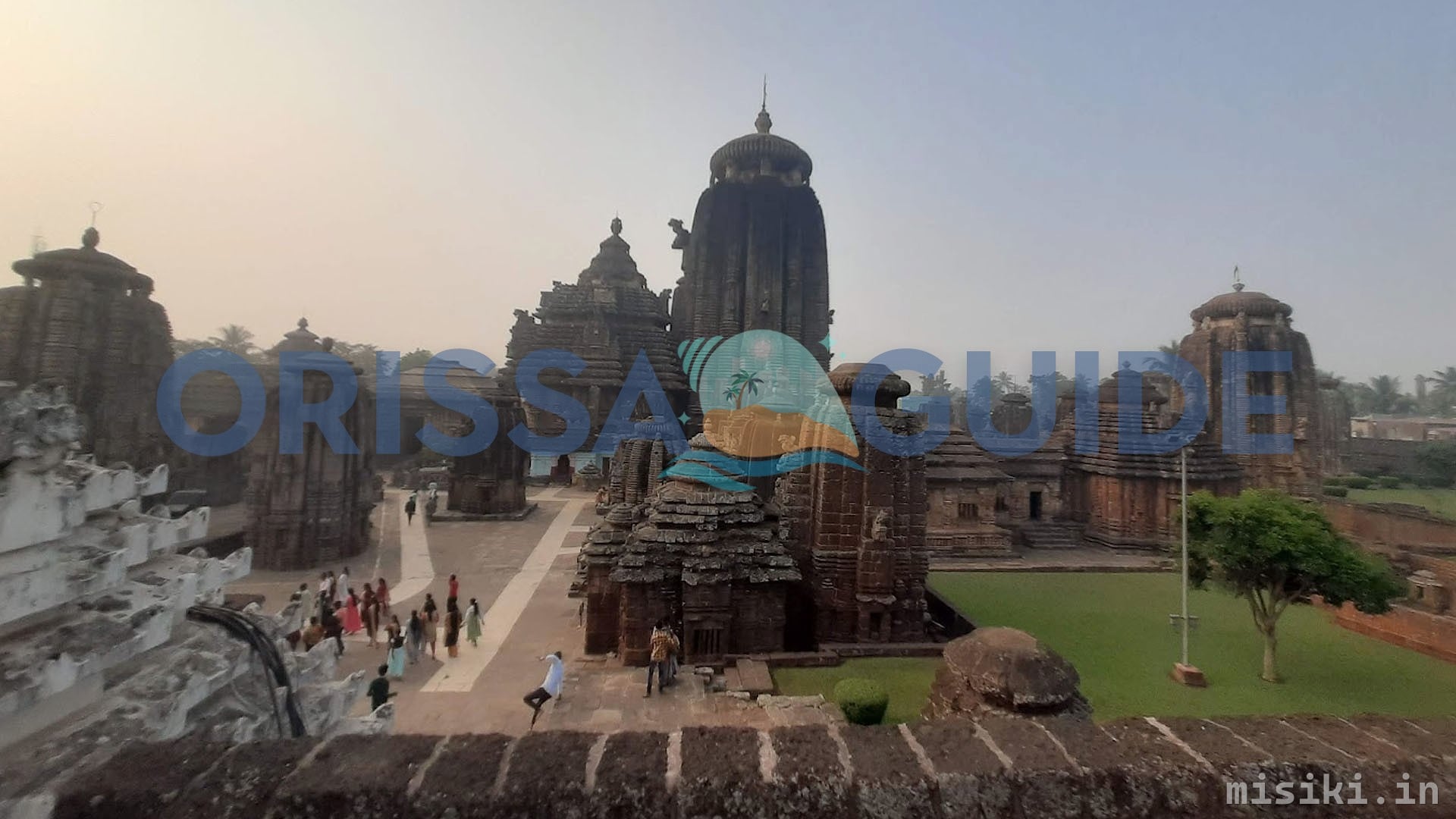
Quick Info
Timings: 6:00 AM to 12:00 PM and 4:00 PM to 9:00 PM (approximate; verify locally)
Entry Fee: Free for all devotees
Best Time to Visit: Early morning, between 6:30 AM and 8:00 AM
Nearest Landmark: Bindusagar Lake area, Old Town / Ekamra Kshetra
Deity: Lord Shiva (Chakreshvara form)
Built: 10th to 11th century CE, Somavamshi or early Ganga period
Picture this. You are standing on a narrow lane in Old Town Bhubaneswar. It is barely 7 in the morning. The auto you took from Kalpana Square dropped you off near Bindusagar, and you walked the rest. Wet stones under your feet. The smell of dhoop and fresh marigold garlands from the flower sellers sitting outside. An old priest is doing abhisheka inside, and the sound of water hitting the Shivalinga mixes with the bells from three different temples nearby. You are not at the Lingaraj. You are not at Mukteshvara. You have found the Chakreshvara Siva Mandira — and it is quieter, older-feeling, and somehow more personal than all the famous ones.
That is the thing about Old Town Bhubaneswar. The temples that do not have giant queues and tourist boards are often the ones that hold the most energy.
Kimbadanti: The Legend of Chakreshvara
The name itself carries meaning. Chakreshvara. Chakra plus Ishvara. The Lord who holds or controls the chakra — the wheel, the cycle, the sacred disc of cosmic order. In Shaiva tradition, this is one of the many names of Shiva as the supreme controller of time and fate.
Local kimbadanti — that is the Odia word for folklore and oral tradition — says that the Chakreshvara Shivalinga here is swayambhu, meaning it appeared on its own from the earth without being carved or placed by human hands. This belief is very common in the Ekamra Kshetra zone, where many of the older lingas are considered to be self-manifested. Devotees say that during excavations in the area long ago, the earth cracked open and the linga revealed itself. The temple was then built around it to protect and honour the deity.
There is also the story of the chakra connection to Vishnu. In Odishan temple tradition, it is not uncommon for a Shaiva temple to carry Vaishnava imagery or vice versa, because the philosophical tradition here was deeply syncretic. Some local elders say that the Chakreshvara form specifically represents Shiva in his role as the one who can stop the Sudarshana Chakra itself — the weapon of Vishnu. In other words, this is Shiva as the supreme power beyond even the great weapons of the cosmos.
Old Town has several such syncretic narratives. The whole Ekamra Kshetra zone was once considered a single sacred geography where different deity traditions existed side by side. The Chakreshvara temple sits within this tradition, carrying both its Shaiva core and the wider Odishan philosophical world around it.
Priests in the area will tell you that the 10th to 11th century period when this temple was built was the height of temple construction activity in Bhubaneswar. The Somavamshi dynasty was in power, and their patronage of Shiva temples was intense. They built temples not just as places of worship but as cosmic diagrams — each temple a map of Mount Meru, the axis of the universe.
The Chakreshvara temple, though smaller and less ornate than the Lingaraj, follows this same architectural grammar. It is a reminder that Old Town is not a museum with a few famous exhibits. It is a living city of temples, and this one has been here for over a thousand years.
Location and How to Reach
The Chakreshvara Siva Mandira is located in the Old Town area of Bhubaneswar, within the zone locally called Ekamra Kshetra. This zone covers the area around Bindusagar Lake, stretching south and east through dozens of ancient temple clusters.
The easiest approach is to go to Bindusagar Lake first. Everyone in the city knows Bindusagar. From there, Old Town is walkable. The streets in this area are narrow and not suited for cars. Autos and e-rickshaws can take you to the edge of the old lanes, but you will walk the last bit.
From the Bhubaneswar Railway Station, take an auto directly to Old Town or Bindusagar — around 30 to 40 rupees depending on your bargaining. From the main city side near Master Canteen or Raj Mahal Square, it is a 10 to 15 minute auto ride.
Once you are in the Old Town lanes, the best approach is to ask locals for the Chakreshvara temple. In this area, every second person knows the temples by name. Old Town people have been living alongside these mandiras for generations. They will point you in the right direction immediately.
The lanes here are stone-paved in parts, uneven, and often wet in the mornings from temple cleaning. Wear flat footwear. Leave heels at home.
Vibe and Atmosphere
The Chakreshvara temple does not have the grand plaza and crowd management systems of Lingaraj. And that is exactly what makes it special.
In the early morning, it is just you, a few regular devotees, and the priest. The sound is only bells, water, and Sanskrit shlokas being muttered under breath. No loudspeakers blaring. No selfie sticks. No tourist buses. Just the smell of incense, the cool stone floor, and the deep silence of a thousand-year-old space.
The architecture around you is Kalinga style. Even if you are not an architecture student, you will feel the weight of the stone. The shikhara above the sanctum rises in a curved form, typical of the Rekha Deula style of Odia temple construction. The surface has carved bands — horizontal lines interrupted by small deity figures and decorative motifs.
In the evenings, the atmosphere changes slightly. Lamps are lit. The sanctum glows with earthen diyas. Devotees from the local neighbourhood come for sandhya aarti. The crowd is still small but the mood becomes more devotional and musical. Some evenings, there is simple bhajan.
If you have seen only the big famous temples of Bhubaneswar, coming here feels like walking into the backstory. This is what all of Old Town looked like before the crowds found the famous ones.
Peace of Mind and Spiritual Experience
For anyone who comes to Bhubaneswar with a spiritual purpose — not just sightseeing — the Chakreshvara temple offers something that the bigger temples cannot always provide. Stillness.
The sanctum is small and intimate. When you stand before the Shivalinga here, there is no crowd pushing from behind. You can close your eyes for a moment. You can actually pray, not just file past. For meditators and seekers, this kind of space is rare in a city that has become increasingly busy.
The energy of the older, less-visited temples in Old Town is often described by regular visitors as being "more concentrated." Centuries of daily puja, continuous worship, and the prayers of thousands of generations have accumulated in the stone itself. Whether you interpret that in a spiritual or an atmospheric sense, the feeling is real. You will notice it.
Visiting Advice: Families, Solo Travelers, and Architecture Enthusiasts
For families coming with children, this is a very accessible temple. There is no long walk, no crowd, and the experience is gentle. Children can observe a real working ancient temple without the overwhelming scale of Lingaraj. It is a good first introduction to Odishan temple architecture for younger visitors.
Solo travelers and women travelers should have no concerns here. Old Town is a community-oriented area. People are used to pilgrims and visitors. The lanes are safe in the mornings and evenings.
For architecture students and heritage enthusiasts, the Chakreshvara temple is part of a cluster worth mapping out. Do not visit this temple in isolation. Plan an Old Town walk that includes multiple smaller temples in the same zone. Combine it with a visit to Parashurameshvara temple, Uttareshvara, and a quiet sit at Bindusagar ghats. You will get a far richer picture of Ekamra Kshetra than any single monument visit can give.
The carvings on smaller temples like this one are often better preserved than on the more famous ones, simply because fewer people have touched them. Look at the base mouldings, the raha niches on the walls, and the decorative bands just below the shikhara. Even partial carvings here carry fine detail.
Belief and Local Significance
For Bhubaneswar locals, especially families who have lived in Old Town for multiple generations, the Chakreshvara temple is a neighbourhood deity. It is not a tourist attraction to them. It is the temple where their parents brought them as children, where they pray before important life events, and where they come during Shiva-related festivals like Mahashivratri and Shravan Somavar.
The Somavar — Monday — is the most important day for this temple. Shiva's day. Devotees come for abhisheka with water, milk, and bilva leaves. The puja is simple and traditional, without the theatrical scale of bigger temples. That simplicity is itself considered sacred by regular visitors.
During Mahashivratri, even this small temple sees a long line of devotees. Old Town celebrates this festival intensely, and the Chakreshvara temple is one of many active points in the all-night worship circuit that people do across the Ekamra Kshetra area.
Energy and Vibrations
Standing in front of the Shivalinga at Chakreshvara, many regular visitors describe a sense of groundedness. Shiva's energy in the Odishan temple tradition is not the fierce, destructive energy that outsiders sometimes imagine. It is more like the stillness at the centre of everything. The eye of the storm.
The linga form itself — simple, unadorned, ancient — concentrates that energy. There are no elaborate decorations to distract. Just the form, the light of the diya, and the cool stone floor beneath your feet.
Older devotees will tell you that the swayambhu lingas carry more energy than the installed ones. That the earth itself is the source. Standing in a 10th-century temple above a linga that has been worshipped every single day for a thousand years, it is not hard to understand why people feel something here.
Nearby Temples and How to Combine Your Visit
The Ekamra Kshetra area is dense with temples. If you are coming to Chakreshvara, plan to spend at least two to three hours in Old Town.
Name | Area | Entry | Rating | Best For |
|---|---|---|---|---|
Chakreshvara Siva Temple | Old Town, Ekamra Kshetra | Free | 4.4 | Quiet prayer, heritage walks |
Lingaraj Temple | Old Town | Free (Non-Hindus: viewing platform) | 4.8 | Grand Shaiva worship, architecture |
Mukteshvara Temple | Old Town | Free | 4.7 | Sculptural detail, photography |
Parashurameshvara Temple | Old Town | Free (ASI site) | 4.5 | Early Kalinga architecture |
Bindusagar Lake Ghats | Old Town | Free | 4.3 | Sunrise, reflection, atmosphere |
Uttareshvara Temple | Old Town | Free | 4.2 | Peaceful puja, small crowds |
Frequently Asked Questions
What are the timings for Chakreshvara Siva Temple? The temple generally opens in the early morning around 6:00 AM for morning puja and closes around noon. It reopens in the late afternoon around 4:00 PM and remains open until around 9:00 PM. Timings can vary slightly on festival days or depending on the priest's schedule, so arriving before 8:00 AM is the safest bet for morning darshan.
Is there any entry fee? No entry fee at all. This is a traditional neighbourhood temple with no ticket counter or donation queue. Voluntary offerings during puja are common but never expected or asked for.
Can non-Hindus visit the Chakreshvara temple? Unlike the Lingaraj, which has restrictions for non-Hindus entering the main complex, smaller temples in Old Town are generally more accessible. However, always approach the priest and ask before entering the sanctum. Respect local customs. Remove footwear outside the temple premises.
Where can I keep my shoes? There is usually a small area outside the temple entrance where devotees leave footwear. No formal shoe stand or locker service here. Keep your shoes in a bag if you are concerned or leave them with your companion outside.
Is photography allowed inside? Inside the sanctum, photography is generally not appropriate and is usually not permitted. The carvings on the exterior of the temple can be photographed without restriction. Always check with the priest before taking any photos inside.
Can I pay by UPI for prasad or puja booking? Small temples like Chakreshvara operate on cash. Keep small notes of 10 and 20 rupees for donations or prasad. Do not expect UPI or digital payments here. The nearest ATM is near Old Town main road or Bindusagar area.
Is the temple accessible for elderly visitors? The lanes leading to the temple are uneven and narrow. Elderly visitors should wear flat, non-slip footwear and may need assistance on the stone paths. Once at the temple itself, access to the main puja area is generally flat. There are no formal accessibility ramps or facilities.
What is the best day to visit? Monday, called Somavar, is the most auspicious day for Shiva temples. The morning puja on Mondays is more elaborate and attendance is higher from local devotees. If you want a quieter experience, visit on a weekday morning that is not Monday.
How do I reach Old Town from the new city areas? From Kalpana Square, Master Canteen, or Raj Mahal Square, take any auto towards Old Town or Bindusagar. Fare is 30 to 50 rupees depending on starting point. Auto drivers know Old Town well. You can also take an Ola or Rapido to Bindusagar Lake and walk from there. The walk through Old Town lanes is part of the experience itself.
Is the area safe for solo women travelers? Yes. Old Town is a residential and temple area with constant foot traffic from pilgrims and local families. Morning visits in particular are very safe. Be normally cautious as you would in any public space, and you will have no issues.
Are there any food stalls nearby? Old Town has small tea stalls and pitha shops especially in the early morning. You will find local Odia snacks like chakuli pitha and arisa pitha sold near the temple lanes during festival seasons. Regular days have basic chai and biscuit stalls. For a proper breakfast, Lingaraj Road or Old Town main road has more options.
When was the Chakreshvara Siva Temple built? Archaeological and architectural evidence places the temple in the 10th to 11th century CE. This was during the height of the Somavamshi dynasty's rule in Odisha, a period that saw massive temple construction activity in Bhubaneswar. The temple follows the classic Kalinga Rekha Deula style of architecture.
