
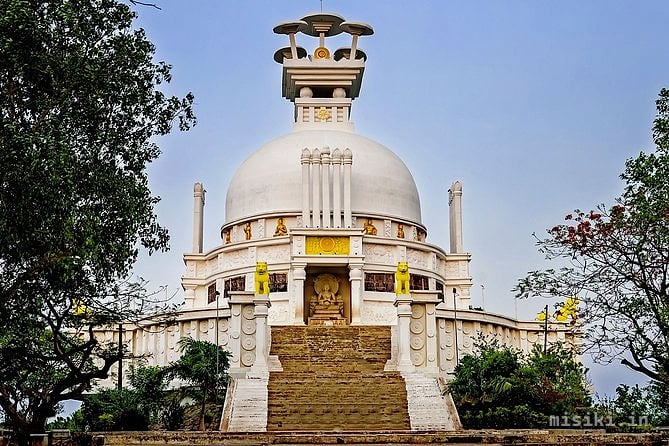
Located on the outskirts of Bhubaneswar, Dhauli Shanti Stupa is a renowned Buddhist monument known for its historical significance and serene atmosphere. This guide will provide you everything you need to know for a hassle-free visit.
Quick Info
- Timings: 6 AM to 8 PM
- Entry Fee: Free
- Best Time to Visit: October to March
- Location: Dhauli, Khordha District, Odisha, India
Before You Visit
Road Conditions
The road to Dhauli Shanti Stupa from Bhubaneswar is mostly smooth, with a well-maintained stretch on the NH316. However, the last stretch leading directly to the stupa is narrower and can get congested, especially during weekends. Watch out for occasional potholes near the site itself, particularly during the monsoon season.
Parking Scene
Parking is available near Dhauli Shanti Stupa, but it can get crowded on weekends and public holidays. There is a designated parking area for both cars and bikes, with fees around ₹20 for bikes and ₹40 for cars. If you arrive late, you might have to park a bit further away and walk up. Always lock your vehicle and avoid leaving valuables inside.
Footwear & Clothing Advice
Visitors need to remove footwear before entering the stupa area. A shoe stand is available, but you might prefer carrying a small bag to keep your shoes with you. There is no enforced dress code, but wearing comfortable clothes is advisable given the climbing involved.
Drinking Water & Amenities
There are basic washroom facilities near the parking area, though they might not be the cleanest. It’s better to carry your own water bottle as the availability of clean drinking water is limited. A few local vendors sell water bottles along the way.
Best Season to Visit
The ideal time to visit Dhauli Shanti Stupa is from October to March when the weather is pleasant. Avoid visiting during peak summer (April-June) due to high temperatures crossing 40°C, and be cautious during the monsoon months (July-September) when the access roads can become slippery.
Local Tips & Insights
Crowd Patterns
Early mornings and late afternoons are the best times to avoid crowds. Weekdays are generally less busy compared to weekends. During major Buddhist festivals, the place can get quite crowded, with devotees from various parts of India visiting the stupa.
Nearby Food Stalls
For a quick bite, you can head to “Maa Tarini Dhabha” near the entrance, which offers typical Odia meals and chai. Another popular spot is “Baba Tea Stall”, known for its piping hot samosas and tea, located a short walk from the stupa.
Photography Spots & Rules
Photography is allowed throughout the stupa. The best spots for photos are from the top of the stupa, where you get panoramic views of the Daya River and surrounding greenery. Early morning light is excellent for capturing the stupa’s beauty.
Estimated Travel Cost
Auto Fare
Auto rickshaws from Bhubaneswar’s Master Canteen area to Dhauli Shanti Stupa typically cost around ₹300-₹350. From Rasulgarh, it would be slightly higher at around ₹400. Always negotiate the fare before starting the journey.
Fuel & Parking Cost
Traveling by own vehicle will cost around ₹200-₹300 for fuel, depending on your starting point in Bhubaneswar. Include parking costs as mentioned above.
Bus & Public Transport
The Mo Bus service runs regularly towards Dhauli, with the nearest stop being about 1 km away from the stupa. Buses from major stops like Jaydev Vihar and CRP Square towards Dhauli are frequent during the day.
Safety & Seasonality Notes
Monsoon Access
During the monsoon, the path leading to the stupa can become slippery with mud, and the stairs may be risky. Wear sturdy footwear and be cautious if you visit during this time.
Summer/Heat Warning
In summer, temperatures soar above 40°C. Avoid visiting during midday, carry a hat, sunscreen, and stay hydrated. Try to visit early in the morning or late in the afternoon when it’s cooler.
Internet & Mobile Signal
Mobile network coverage is generally reliable at Dhauli Shanti Stupa, with good signals for Jio and Airtel. BSNL users might experience weaker reception. However, be prepared for occasional network drops during peak visitor times.
Kimbadanti (Legends & Local Lore)
Dhauli is steeped in history, most famously known as the site of the Kalinga War fought by Emperor Ashoka. It is said that the bloodshed he witnessed here led to his conversion to Buddhism. Local lore speaks of Ashoka seeing a river running red with blood, prompting his change of heart. The stupa itself symbolizes peace and compassion, marking the emperor’s embrace of non-violence.
Comparison Table
| Name | Area | Price | Rating | Best For |
|---|---|---|---|---|
| Dhauli Shanti Stupa | Dhauli | Free | 4.5 | Historical Visits |
| Lingaraja Temple | Old Town | Free | 4.7 | Spiritual Serenity |
| Udayagiri Caves | Khandagiri | ₹15 | 4.3 | Ancient Artifacts |
Frequently Asked Questions
-
Is there an entry fee for Dhauli Shanti Stupa? No, there is no entry fee for visiting Dhauli Shanti Stupa. It is open to all visitors.
-
What are the visiting hours for Dhauli Shanti Stupa? The stupa is open from 6 AM to 8 PM every day.
-
Can I pay via UPI at nearby stalls? Some stalls accept UPI payments, but it’s advisable to carry cash as not all vendors have digital payment facilities.
-
Are there any guided tours available? Occasionally, local guides offer their services near the entrance. However, there’s no official guided tour system in place.
-
Is there a place to keep shoes safely? Yes, there is a shoe stand near the entrance where you can leave your shoes.
-
How far is Dhauli Shanti Stupa from Bhubaneswar railway station? It is approximately 8 km from Bhubaneswar railway station, which takes about 20-30 minutes by auto.
-
Are there any nearby spots worth visiting? Yes, the Daya River and the ancient rock edicts of Ashoka are close by and worth a look.
-
Can I bring my own food to the stupa? Yes, but please ensure you dispose of any waste responsibly as there are limited trash facilities.
-
Is photography allowed at the stupa? Yes, photography is allowed, but be respectful of the site and other visitors.
-
What is the best way to reach Dhauli Shanti Stupa? The most convenient way is by auto or own vehicle, as public transport options are limited.