
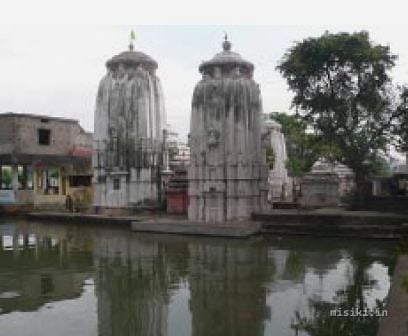
Gokarnesvara Siva Mandira Bhubaneswar: Timings, History and Local Guide (2026)

11 min read
22 April 2026

It is early morning in South Bhubaneswar. The auto-rickshaw drops you near Sisupalgarh. The smell of dhoop agarbatti drifts through the lane before you even see the temple. That is how Gokarnesvara Siva Mandira announces itself — not with crowds or noise, but with fragrance and a quiet pull. This is one of those temples that locals know but tourists rarely find. And that is exactly what makes it worth your time.


Quick Info

  • Deity: Lord Shiva (Gokarnesvara Lingam)

  • Location: Sisupalgarh area, South Bhubaneswar, Odisha

  • Timings: 6:00 AM to 12:00 PM and 4:00 PM to 8:00 PM (approximate; confirm locally)

  • Entry Fee: Free

  • Best Time to Visit: Early morning between 6:30 AM and 8:00 AM, or during Shravan month

  • Nearest Landmark: Near Sisupalgarh archaeological site, South Bhubaneswar

  • How to Pay Prasad/Puja: Cash or UPI accepted at most panda stalls outside


Kimbadanti: The Legend Behind the Name

The name Gokarnesvara is old. Very old. It comes from two Sanskrit roots — "Gokarna" meaning cow's ear, and "Isvara" meaning Lord Shiva. In Hindu cosmology, Gokarna is a sacred geography concept. The ear of a cow is considered an auspicious shape, and when a Shivalinga is said to be "Gokarnesvara," it means this particular form of Shiva is connected to that ancient, primal geography of devotion.

Local pandits in Bhubaneswar will tell you that this temple predates the more famous temples of the Ekamra Kshetra. The dating of this temple goes back to the 1st century BC, which places it among the oldest active Shiva shrines in all of Odisha. Think about that for a moment. When Kharavela was building his empire from nearby Sisupalgarh, this Shivalinga may already have been worshipped by ordinary people — farmers, traders, soldiers returning from battle.

The kimbadanti, or local legend, says that the Lingam here was not installed by human hands. It is considered a Swayambhu Lingam — one that emerged from the earth on its own. This is a classification of extreme sacred importance in Shaivism. Swayambhu lingas are believed to radiate their own Shakti without any need for ritual consecration. You cannot "activate" what was never dormant.

There is also a story passed down among the older residents of the Sisupalgarh locality. They say that in ancient times, a Brahmin from this area had a dream in which Lord Shiva appeared to him in the form of a cowherd. The deity showed him a spot near a grove of trees and told him that a sacred ear-shaped stone lay buried there. The Brahmin dug and found the Lingam. He wept. He built a small shrine. That shrine, over two millennia, became what stands today.

The connection to Sisupalgarh is also spiritually significant. Sisupalgarh was the capital of the Mahameghavahana dynasty and one of the great urban centers of early Odisha. A city of that size and importance would have required divine protection. Gokarnesvara, on its southern edge, served as the presiding deity of that protection. Kings came here. Merchants prayed here before long journeys. Soldiers sought blessings before battle.

Even today, older people in this part of Bhubaneswar refer to the deity as "Amara Gokarnesvara" — "Our Gokarnesvara." That word "amara" carries enormous weight. It is not tourist-speak. It is ownership, belonging, and intimacy between a community and its god.


Location and How to Reach

Gokarnesvara Siva Temple sits in the Sisupalgarh belt of South Bhubaneswar. This area is distinct from the temple-dense Old Town around Lingaraj. It is quieter, more residential, and far less mapped on tourist itineraries.

From Bhubaneswar Railway Station, the easiest route is to take an auto towards Sisupalgarh. Tell the auto-driver "Sisupalgarh danga paase mandir" and most locals will know. The distance is roughly 5 to 6 kilometers from the station. Auto fare should be around 80 to 100 rupees depending on the route. OLA and Rapido are also available in this corridor.

If you are coming from Infocity or the airport side, head towards NH16 and turn south towards the Sisupalgarh junction. The temple area falls before the main Sisupalgarh archaeological excavation site.

Nearby reference points include the ruins and mound area of Sisupalgarh itself, which is a protected archaeological zone. Once you are in that neighborhood, ask a local shopkeeper for "Gokarnesvara Mandira." People here are used to pointing the way. There are no huge signboards. The temple is modest in its external presence, which is part of its charm.

Parking is not a formal concern. Two-wheelers and autos can stop near the temple entrance. If you are coming by car, park at the edge of the lane and walk the last 200 to 300 meters. The lanes are narrow in this section.


Vibe and Atmosphere

South Bhubaneswar has a different energy from the Old Town. It is not the rush of Lingaraj on a Monday. It is not the commercial chaos of Puri Road. Sisupalgarh is old land. You can feel it in the soil, in the way the trees sit, in the way the roads curve without a grid plan.

Gokarnesvara Mandira itself is compact. It is not a sprawling complex. The sanctum sanctorum is small and intimate. The moment you step inside the inner courtyard, the noise from the outside road drops away almost instantly. That is not an accident. These temples were built with acoustic and spatial logic by ancient craftsmen who understood how to separate the sacred from the profane.

In the early morning, the atmosphere is deeply meditative. The priest does the morning abhishek — bathing the Lingam with water, milk, and honey. The sound of the conch shell (sankha) can be heard from outside the gate. There will be a handful of local devotees. An older woman with a brass thali. A young man doing namaskara and then rushing to catch his bus. This is the real Bhubaneswar, not the tourist version.

By late morning the crowd increases slightly, especially on Mondays and during Shravan. In the evening, the atmosphere shifts to something more devotional and communal. Families come. Children run barefoot on the cool stone floor. The lighting is warm and flickering — mostly from oil lamps and agarbatti stands near the entrance.


Peace of Mind and Spiritual Experience

Temples dating from the 1st century BC carry a particular stillness that newer constructions do not. There is no way to explain this scientifically. But anyone who has sat quietly in a genuinely old temple will recognise it. Gokarnesvara has that quality.

There are quiet corners near the outer wall where you can sit after darshan. No one will rush you. The pandas here are not aggressive. This is a neighborhood temple, not a pilgrimage-economy temple. If you want to sit in silence for fifteen minutes after praying, you can. That itself is a rare thing in urban Bhubaneswar.

For those who practice meditation or pranayama, the early morning window before 7:30 AM is ideal. The sanctum energy during abhishek time is considered very high by devotees. Many elderly locals come specifically for this window and stay for 30 to 45 minutes doing personal japa.


Who Should Visit and How to Enjoy It

For architecture enthusiasts: The temple structure carries early Kalinga architectural elements. Observe the overall proportion of the shikhara, the doorframe carvings, and the base platform (pitha). Even if the later restorations have altered some surfaces, the structural grammar is ancient.

For solo travelers: This is an ideal stop if you are doing a deeper Bhubaneswar temple circuit beyond the usual Lingaraj-Mukteswar-Rajarani cluster. It pairs well with a visit to the Sisupalgarh archaeological site itself, which is just minutes away.

For families with children: The campus is manageable and not crowded. Children can move freely. Explain to them that this temple is older than most countries in the world — that tends to get their attention.

For students of history: The proximity to Sisupalgarh makes this a powerful experiential combination. Read about the Mahameghavahana dynasty before you visit. Then stand at Gokarnesvara and let the context settle.


Belief and Local Significance

For the residents of South Bhubaneswar and the surrounding mohallas, Gokarnesvara is not a tourist destination. It is a functioning centre of daily life. People stop here on the way to work. Shopkeepers from the nearby market come before opening their shutters. Auto-drivers park briefly and offer water to the Lingam.

The temple is particularly significant during Maha Shivaratri, when devotees observe an all-night vigil, and during the entire month of Shravan (July-August), when Kanwar pilgrims and local Shiva devotees visit in groups. During Shravan Somavar (Mondays in Shravan), the turnout is noticeably higher.

Local belief holds that the Gokarnesvara Lingam here has particular power to fulfill wishes related to health and protection of the family. This is consistent with the Swayambhu Lingam tradition across Odisha and Karnataka (the original Gokarna in Karnataka shares many of these beliefs).


Energy and Vibrations

There is something specific about the energy inside a Swayambhu Lingam shrine that repeat visitors notice. The sanctum at Gokarnesvara is compact. You stand close to the deity. There is no thick glass or iron grille separating you from the Lingam during most worship periods. That physical proximity matters.

The black stone of the Lingam, worn smooth by centuries of abhishek, carries a visual weight that is hard to describe. It does not look new. It does not look restored. It looks exactly like something that has been loved and prayed upon for two thousand years, because it has.

Devotees report a feeling of groundedness after spending time here. Not the ecstatic energy of high-pilgrimage temples, but something quieter and more stabilising. Shiva in this form is Sthanu — the immovable one, the still pillar at the centre of the cosmos.


Comparison Table: Shiva Temples in South and Central Bhubaneswar

Name

Area

Entry Fee

Rating

Best For

Gokarnesvara Siva Temple

Sisupalgarh, South Bhubaneswar

Free

4.4

Ancient history, quiet darshan

Lingaraj Temple

Old Town, Bhubaneswar

Free (non-Hindus: viewing platform)

4.8

Grand ritual, festival experience

Mukteswar Temple

Old Town, Bhubaneswar

Free

4.7

Architecture, photography

Brahmesvara Temple

Old Town, Bhubaneswar

Free

4.5

Detailed carvings, fewer crowds

Rajarani Temple

Near Tankapani Road

Paid (ASI site)

4.6

Architecture enthusiasts


Frequently Asked Questions

What is the significance of the name Gokarnesvara? Gokarnesvara means "the Lord whose sacred form is connected to Gokarna" — referring to the cow's-ear shape considered auspicious in Shaivite tradition. This name connects the temple to the broader Gokarna pilgrimage tradition found across India and particularly in Karnataka. The Bhubaneswar version is one of the oldest instances of this sacred name in Odisha.

Is Gokarnesvara Temple open to all faiths and communities? Yes. Like most Shiva temples in Odisha outside the Puri Jagannath jurisdiction, the Gokarnesvara Mandira does not restrict entry based on religion. Visitors of all backgrounds can enter and observe. Respectful dress and removal of footwear before the main gate are expected.

What are the exact timings of the temple? The general timings are 6:00 AM to 12:00 PM for the morning session and 4:00 PM to 8:00 PM for the evening session. These timings can vary slightly by season and festival periods. The best practice is to arrive before 8:00 AM for the morning visit and before 6:30 PM for the evening visit to be sure you catch darshan before the gates close.

Is there a dress code for visiting? There is no strict written dress code, but traditional modesty is expected. Avoid sleeveless tops and very short clothing out of respect. Many locals visit in regular everyday clothes. Women wearing salwar or saree are most common. Men in dhotis or simple trousers are completely appropriate.

Can I pay for puja or archana via UPI? Yes, most panda or pujari stalls outside the temple accept PhonePe, Google Pay, and Paytm. For formal archana inside, carry some cash (50 to 100 rupees is typical) as the arrangement inside the sanctum may not always have a phone for scanning.

Is photography allowed inside the temple? Photography of the Lingam and sanctum is generally not permitted during active puja. Outside the sanctum in the courtyard, photography for personal memory is acceptable. Do not use flash. Do not photograph the deity during abhishek. When in doubt, ask the priest on duty.

Is there parking near the temple? There is no dedicated parking lot. Two-wheelers can be parked along the lane outside. Four-wheelers should use a wider road nearby and walk the last few minutes. The area is not congested enough to be a serious problem on normal weekdays, but Mondays during Shravan month can be busier.

Are there any food or prasad stalls near the temple? There are typically small stalls near the entrance selling flowers, bilva leaves (belpatra, essential for Shiva puja), incense, coconuts, and small prasad packets. There are also tea stalls in the nearby market area. Full vegetarian food can be found within a short auto ride in the main South Bhubaneswar market belt.

What is the best time of year to visit for a special experience? Maha Shivaratri (February-March) and the entire Shravan month (July-August) are the most spiritually charged periods. Mondays are always considered auspicious for Shiva. If you want a quiet experience without any crowd at all, visit on a regular Tuesday or Wednesday morning in the non-Shravan months before 8:00 AM.

How old is this temple and is it a protected monument? The temple dates to approximately the 1st century BC, making it over two thousand years old. Its proximity to the Sisupalgarh site, which is an ASI (Archaeological Survey of India) protected monument, places it in a zone of high historical importance. Whether the temple itself has formal ASI protection status should be confirmed with the local ASI office in Bhubaneswar, but the site is actively maintained by its local community of devotees.

How do I combine this visit with Sisupalgarh? The Sisupalgarh archaeological site is within walking distance or a very short auto ride from the temple. A good plan is to visit Gokarnesvara Mandira first in the early morning for darshan, then walk or ride to the Sisupalgarh ruins for a historical context visit. Carry water and wear comfortable footwear as the excavation site involves some open-ground walking. The combination of a 1st century BC active temple and a 1st century BC urban archaeological site in the same morning is genuinely rare and worth planning for.

About this Guide

This guide was curated by the Misiki editorial team. We visit local spots, talk to residents, and verify details to bring you the most authentic recommendations in bhubaneswar.