
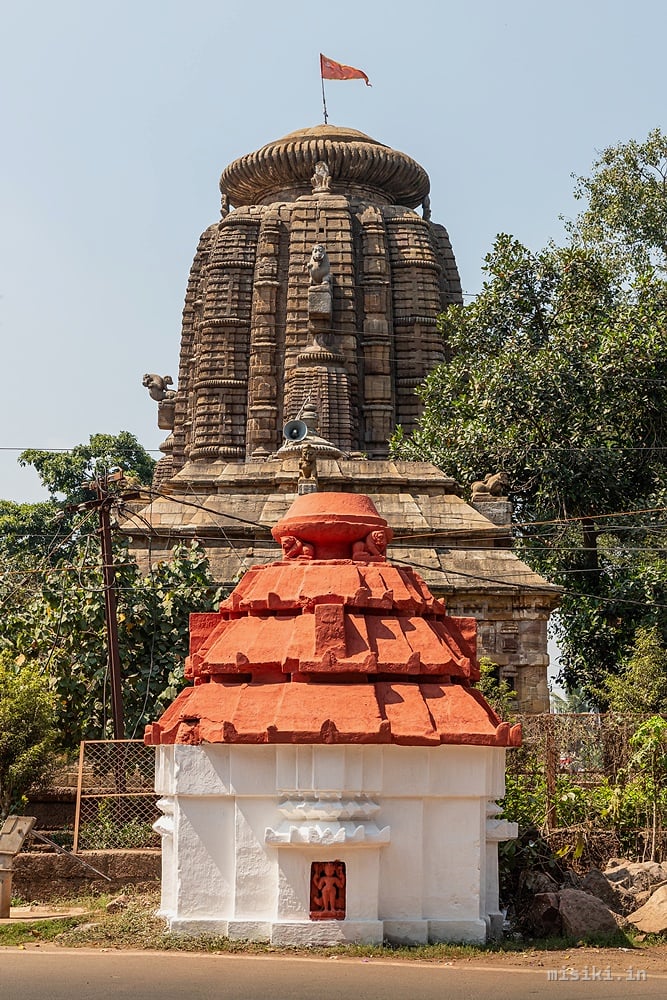
Labesvara Siva Mandira: Complete 2026 Visitor Guide

12 min read
22 April 2026

The smell of wet stone and camphor hits you before you even see the shikhara. Somewhere near the old lanes behind Bindusagar Lake, tucked between older, more famous temples and narrow gullies where cycle-rickshaws barely pass, sits the Labesvara Siva Temple. Most auto drivers know it. Most tourists miss it entirely. That gap is exactly why you should go.


Quick Info

Detail

Info

Deity

Lord Shiva (Labesvara Linga)

Location

Old Town, Ekamra Kshetra, near Bindusagar Lake

Century

15th Century CE

Entry Fee

Free

Timings

6:00 AM to 12:00 PM and 4:00 PM to 9:00 PM (approximate; verify locally)

Best Time to Visit

Early morning, 6:30 AM to 8:00 AM

Photography

Limited; ask the pujari before clicking inside sanctum

Dress Code

Modest clothing; remove footwear at the entrance

Nearest Landmark

Bindusagar Lake, Lingaraj Temple complex area


Kimbadanti: The Legends Behind the Labesvara Linga

Old Town Bhubaneswar carries its legends the way a banyan tree carries roots. You cannot find where one ends and the next begins. The Labesvara Siva Temple is no different. Local pujaris and old-timers in the Ekamra Kshetra area speak of this temple not as something built, but as something revealed.

The name "Labesvara" itself carries weight. In the older Odia and Sanskrit naming tradition of this region, shrines dedicated to Shiva often carry names that encode a specific aspect or power of the deity. "Laba" in some local interpretations connects to the concept of sustenance and grace, while "Isvara" is simply the Lord. So Labesvara is the Isvara who bestows, the Shiva who gives quietly without announcement.

In the oral tradition of Old Town, the linga at this temple is said to be svayambhu, meaning self-manifested. Not installed by human hands but discovered. This is a recurring belief across the Ekamra Kshetra zone, where dozens of lingas are believed to have emerged from the earth or from water, particularly around Bindusagar, the sacred tank that connects all the shrines spiritually. The story told by older locals is that during the 15th century, a devout brahmana living near Bindu Sagar was drawn repeatedly to one particular spot by the sound of a low, resonant hum, audible only in the pre-dawn hours. When he dug at that spot, he found the linga already fully formed, needing only a mandapa built around it to protect it from rain and sun. This is how Labesvara came to be housed.

The 15th century was a particularly charged period in Odisha. The Ganga dynasty had recently given way to the Suryavamsha, and the Gajapati kings were extending patronage broadly to temples across the Ekamra Kshetra. Smaller, neighborhood temples like Labesvara were not always royal projects. Many were community temples built by merchant guilds, brahmana families, or village councils. This gave them a different character from the grand projects like Lingaraj. They were intimate. They still are.

Devotees also connect Labesvara with local stories about protection from fever and illness. Mothers from the nearby lanes have historically brought young children here during Kartika month, particularly during the sacred period when Bhubaneswar's temple culture is at its most alive. The belief is that a pradakshina (circumambulation) of the shrine, done barefoot at dawn, carries specific healing blessings. This practice continues to this day, though in smaller numbers than before.

The temple is also believed to be one of the many subsidiary shrines that together form the larger spiritual web of the Ekamra Kshetra. Traditional texts describe this zone as having sixty-four shaktipeethas and hundreds of Shiva lingas, each with its own name and character. Labesvara holds its own position in this map, not as the most prominent, but as one that has never broken its continuity of worship. Puja has been offered here without significant interruption for centuries. That kind of quiet persistence carries its own kind of power.


Location and How to Reach

The temple sits inside the Old Town area of Bhubaneswar, in the zone locals call Ekamra Kshetra. If you are starting from Bhubaneswar Railway Station, take an auto or cab toward Lingaraj Temple. From Lingaraj, it is a short walk or a two-minute auto ride to the Bindusagar Lake area. The lanes around Bindusagar are dense with shrines, and Labesvara is one of them. Ask any local in the Bindu Sagar ghat area and they will point you in the right direction.

If you are coming from Unit 4 or Kalpana area, head toward AG Square and then take the road toward Old Town. From AG Square, go past Master Canteen Chowk and continue toward the Lingaraj zone. The Old Town area begins once the road narrows and you start seeing red-painted temple walls on both sides.

The temple is best approached on foot once you reach the Bindusagar perimeter. The lanes in this zone are narrow. Parking a car is difficult. Two-wheelers can park near the lake ghat area. Auto-rickshaws can drop you at the main road and you walk in. Carry small change for offerings or prasad stalls nearby. UPI works fine at most nearby shops if you need to buy flowers or coconuts.

From the lake itself, walk along the southern side toward the cluster of smaller temples. The signage in this area is modest. Ask for "Labesvara Mandira" specifically. Locals will know.


Vibe and Atmosphere

The early morning experience at Labesvara is something else entirely. You arrive before 7 AM and the air still carries that particular cool of an Odisha dawn. The pujari has likely just finished the first abhisheka. You can hear the dripping water, the low chanting, and the distant sound of bells from Lingaraj further down. The whole Old Town hums at this hour.

The temple itself is compact. This is not a sprawling complex. It is a single shikhara-style structure in the Kalinga tradition, with a relatively modest facade. The stone is old and worn in the places where centuries of hands have touched it. The outer walls, if they carry any surviving carvings, reflect the 15th-century style common to this region, which is less ornate than the Ganga-period masterworks but no less intentional.

Inside the sanctum, the space narrows. There is usually incense smoke. The linga is the focus of everything, small and black and very still. That stillness is what you notice. Outside, the city moves. In here, it does not.

By evening, the atmosphere shifts slightly. More families come after 5 PM. Children run around the ghat area. Women carry diyas toward the lake. The temple takes on a domestic warmth rather than the austere quality of early morning. Both versions are worth experiencing.


Peace of Mind and Spiritual Experience

For anyone looking for a quiet, non-touristy spiritual experience in Bhubaneswar, Labesvara is exactly that. Unlike Lingaraj or even Mukteshwar, this temple does not attract crowds of out-of-town pilgrims or guided tour groups. The worshippers here are mostly local. That changes the energy completely.

You can sit outside the mandapa for as long as you like. Nobody is rushing you. There is no queue system, no token, no timed entry. You arrive, you offer your pranama, you sit for a while, you leave when you feel like leaving. This simplicity is rare in a city where temple culture has grown increasingly managed and organized.

The acoustic quality of old stone temples like this one is also part of the spiritual experience. Even ambient sound feels muffled. The outside world retreats. If you come during off-peak hours on a weekday, you may find yourself alone with just the pujari and the silence for several minutes at a stretch.


Visiting as a Family, Solo Traveler, or Architecture Enthusiast

For families, this is a low-effort, high-meaning visit. Children do fine here. There is no long walk, no steep climb, no complicated ritual required to participate. You buy flowers from the stalls near Bindusagar, you go in, you offer, you come back. The whole thing takes 20 to 30 minutes if you are moving at a comfortable pace.

Solo travelers who enjoy slow wandering will find the entire Bindusagar zone worth half a day. Labesvara is one stop among many. Start at the lake, do a slow clockwise walk, enter each small temple you encounter, and Labesvara will find you at some point along that walk.

Architecture students and heritage enthusiasts will want to pay attention to the shikhara proportions and any surviving decorative elements on the outer walls. 15th-century Kalinga temple architecture occupies a transitional phase, post-Ganga dynasty but still deeply rooted in the Deula style. The smaller neighborhood temples of this period are actually very instructive because they show what the tradition looked like when it was being reproduced at a community scale rather than a royal scale.


Belief and Local Significance

For Bhubaneswar locals, particularly those from Old Town families, Labesvara holds the kind of significance that does not get explained, only practiced. These are the temples where people go on the way to work, not just on festival days. A quick stop, a quick prayer, and back on the road.

Kartika Purnima is the biggest time. During the lunar month of Kartika, the entire Ekamra Kshetra zone activates. Devotees perform kartika brata, doing daily visits to Shiva temples at dawn. Labesvara sees more footfall during this period than at any other time of year. The oil diyas placed along the temple walls and ghat steps during this month create a visual that Bhubaneswar's Instagram photographers have only recently started documenting.

Maha Shivaratri is the other peak. On that night, the temple will have continuous puja through the early hours. If you want to experience Labesvara at its most alive, come on Maha Shivaratri night.


Energy and Vibrations

There is a school of thought among regular temple-goers in Bhubaneswar that the smaller, older Shiva lingas of the Ekamra Kshetra carry a concentrated shakti precisely because they have been worshipped without interruption for so long. Continuous devotion, they say, builds up a kind of energy in the stone itself.

Whether or not you hold that view, the physical experience of entering Labesvara is noticeably different from entering a newer or more commercialized shrine. The stone is darker, cooler, and older. The linga sits in a space that has known centuries of water, flowers, and fire. That depth communicates something that newer temples do not, regardless of how grand they are. There is a groundedness here. A settledness. You feel like this place has been here longer than anyone's memory and will be here long after.


Comparison Table: Old Town Shiva Temples Near Bindusagar

Name

Area

Entry Fee

Rating

Best For

Labesvara Siva Temple

Old Town, Bindusagar zone

Free

4.2

Quiet darshan, heritage walk

Lingaraj Temple

Old Town

Free (non-Hindus: view from platform)

4.8

Main Shiva pilgrimage

Mukteshwar Temple

Old Town

Free

4.7

Architecture, photography

Rajarani Temple

Tankapani Road

Entry fee applies

4.5

Temple art, archaeology

Papanasini Temple

Bindusagar Lake

Free

4.0

Lake-side darshan

Kedara Gowri Temple

Old Town

Free

4.1

Local puja, Kartika brata


Frequently Asked Questions

What is the Labesvara Siva Temple? Labesvara Siva Temple is a 15th-century Kalinga-style Hindu temple located in the Old Town area of Bhubaneswar, Odisha, within the sacred Ekamra Kshetra zone near Bindusagar Lake. It is dedicated to Lord Shiva and is considered one of the many ancient subsidiary shrines that make up Bhubaneswar's historic temple cluster.

What are the timings of Labesvara Siva Temple? The temple generally follows morning and evening timings, roughly 6:00 AM to 12:00 PM and 4:00 PM to 9:00 PM. These timings can vary slightly based on festivals or the pujari's schedule. It is always a good idea to arrive by 7:00 AM for undisturbed morning darshan.

Is there any entry fee? No. Like most temples in the Old Town Ekamra Kshetra area, Labesvara Siva Temple has no entry fee. Visitors are welcome to offer flowers, coconut, or bilva leaves, all available from nearby vendors.

Can non-Hindus visit Labesvara Siva Temple? Unlike Lingaraj Temple, which restricts non-Hindu entry inside the main complex, smaller neighborhood temples like Labesvara are generally more accessible. That said, always be respectful and follow the pujari's guidance. Dress modestly, remove footwear, and avoid entering the sanctum without permission.

How do I reach Labesvara Siva Temple from Bhubaneswar Railway Station? Take an auto or cab to Lingaraj Temple, which takes about 20 to 25 minutes depending on traffic. From Lingaraj, ask a local to guide you to the Bindusagar ghat area. Labesvara is within walking distance. Total travel cost from the station should be around Rs. 80 to 120 by auto.

Is photography allowed inside the temple? Photography inside the sanctum is generally discouraged. You can photograph the outer architecture and the surroundings freely. Always ask the pujari before pointing a camera toward the linga or the inner chamber. Most pujaris here are cooperative if you are respectful.

What is the best time of year to visit? The best time to visit for a spiritual experience is during Kartika month (October to November) or on Maha Shivaratri. For a relaxed heritage walk with fewer crowds, visit between November and February when the weather is cool. Avoid peak summer months as the stone lanes of Old Town retain heat.

Is parking available near Labesvara Temple? There is no dedicated parking near the temple. The lanes of Old Town are not car-friendly. Two-wheelers can park along the Bindusagar ghat road. If coming by car, park near the main Lingaraj road and walk in. Keep 10 to 15 minutes for the walk from the main road.

Can I pay via UPI for prasad or puja materials? Yes. Most flower and coconut vendors near Bindusagar Lake and in the Old Town temple lanes now accept UPI payments. Keep the PhonePe or GPay app handy. The temple itself does not charge any fee, but if you want to contribute to the pujari's upkeep or for special puja, cash is still preferred inside.

What should I wear when visiting? Wear modest, comfortable clothing. Avoid shorts or sleeveless tops. A cotton kurta or salwar is ideal for women. Men can wear a dhoti or simple trousers with a shirt. You will need to remove your footwear at the entrance, so avoid complicated footwear if you plan to visit multiple temples in one go.

Is Labesvara Temple suitable for children and elderly visitors? Yes. The temple does not require climbing or long walks. The compound is small and accessible. Elderly visitors should wear non-slip footwear as temple floors can be slippery after the morning abhisheka water drains slowly. The pace of the place is calm and unhurried, making it comfortable for all ages.

What is special about this temple compared to other Shiva temples in Bhubaneswar? Labesvara's distinctness lies in its age, its intimacy, and the fact that it is primarily a local temple rather than a pilgrimage destination. It has not been heavily restored or modified, which means the architecture and atmosphere carry a more genuine sense of antiquity. For visitors tired of crowded heritage sites, Labesvara offers the same depth in a quieter register.

About this Guide

This guide was curated by the Misiki editorial team. We visit local spots, talk to residents, and verify details to bring you the most authentic recommendations in bhubaneswar.