
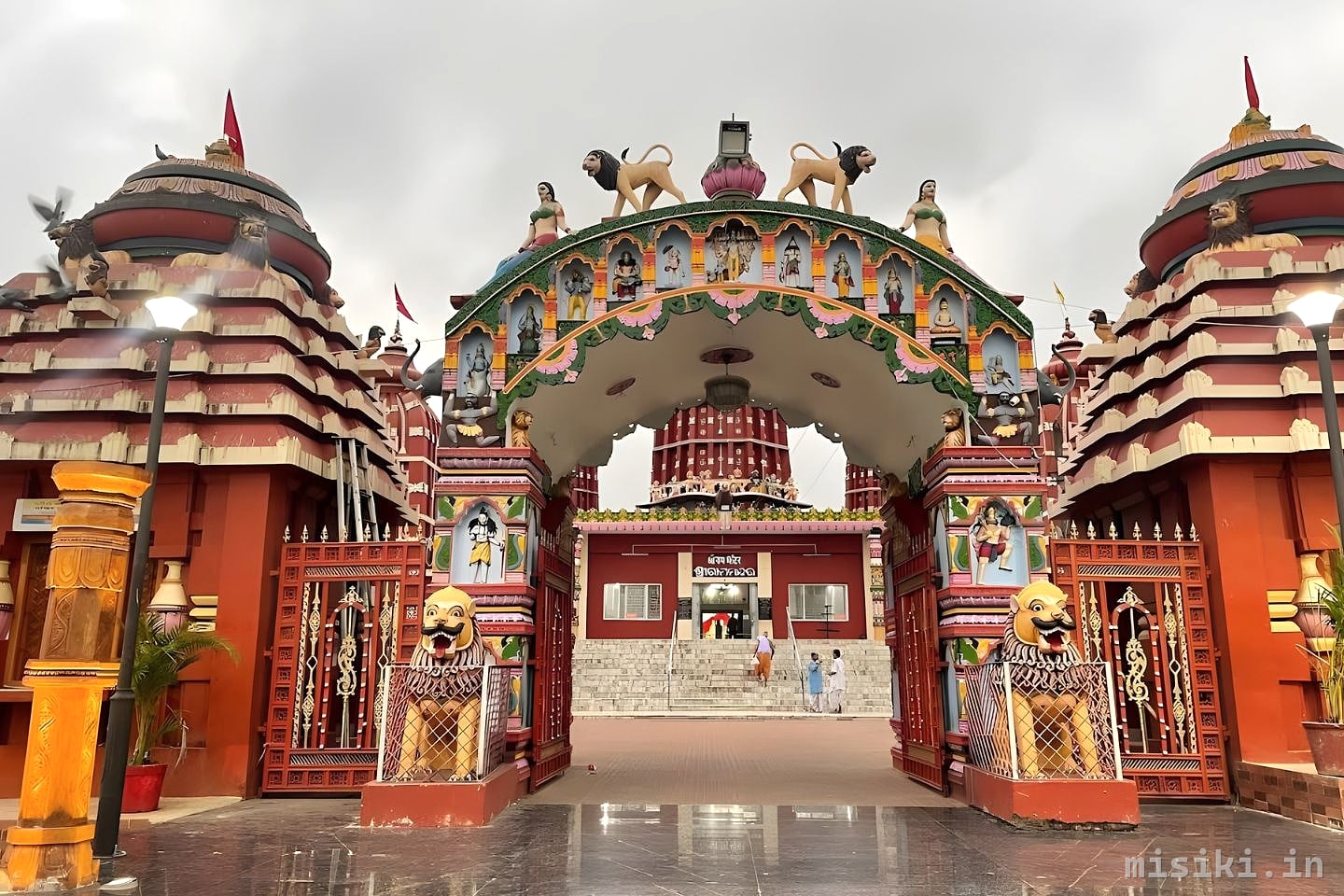
Quick Info
- Timings: 6:00 AM to 9:00 PM
- Entry Fee: Free
- Best Time to Visit: Early mornings or after 5:00 PM
- Location: Janpath, near Master Canteen, Bhubaneswar, Odisha
Before You Visit
Road Conditions
Reaching Ram Mandir on Janpath is fairly straightforward. The main road, Janpath, is well-paved and usually in good condition. However, be cautious during rush hours (8:00 AM - 10:00 AM and 5:00 PM - 7:00 PM) as the traffic can get quite heavy, especially near Master Canteen Square. The last stretch leading directly to the temple is a narrow lane, so if you’re driving, be prepared for a bit of congestion.
Parking Scene
Parking around Ram Mandir can be a bit tricky. For cars, the best option is to park at the designated parking area near the Janpath intersection, which charges around ₹30 for a couple of hours. Parking for bikes is more flexible, with a few spots available directly on the lane leading to the temple, usually costing ₹10. It’s safe to park here, but it’s always good to avoid leaving valuables in your vehicle.
Footwear & Clothing Advice
Like most temples in India, you need to leave your footwear outside. There’s a small paid locker service near the entrance where you can safely store your shoes for ₹5. When it comes to clothing, it’s best to dress conservatively. Men should avoid shorts, while women should prefer traditional wear like sarees or salwar kameez.
Drinking Water & Amenities
Inside the temple premises, there’s a drinking water facility near the main gate. However, it’s advisable to carry your own water bottle. Washroom facilities are available, though basic, and they’re located near the rear of the temple complex.
Best Season to Visit
The ideal time to visit Bhubaneswar is from November to February when the weather is pleasant. Avoid the summer months (March to June) as temperatures can soar above 40°C, and the monsoon season (July to September) which can make the roads muddy and slippery.
Local Tips & Insights
Crowd Patterns
The temple sees the most footfall during festivals like Ram Navami or Diwali. For a quieter experience, visit early in the morning (around 6:00 AM) when the temple is peaceful, and you’ll mostly find locals offering their prayers.
Nearby Food Stalls
After your temple visit, you can enjoy some local snacks. Just outside the temple, “Baba Tea Stall” serves a strong cup of tea along with samosas and kachoris. If you’re looking for a heartier meal, “Chunmun Dhaba” on Janpath offers delicious Odia thalis at reasonable prices.
Photography Spots & Rules
Photography is allowed in most parts of the temple, but avoid taking photos inside the sanctum where the deities are housed. The best spot for capturing the temple’s grandeur is from the main entrance, especially during sunset when the temple is beautifully lit.
Estimated Travel Cost
Auto Fare
If you’re coming from Master Canteen, an auto-rickshaw will cost you around ₹50. From Rasulgarh, expect to pay about ₹80. Negotiate the fare beforehand as rates aren’t always fixed.
Fuel & Parking Cost
For those driving, fuel cost from central Bhubaneswar (e.g., from Patia) would be approximately ₹100 round-trip, considering the current petrol rates. Add parking fees of ₹30-₹40.
Bus & Public Transport
The temple is well-connected by the local Mo Bus service. Route 701 and 801 stop near Master Canteen, and from there, it’s a short walk to the temple. A bus ticket costs around ₹10 to ₹20 depending on your starting point.
Safety & Seasonality Notes
Monsoon Access
During monsoons, be cautious as the approach to the temple can get slippery. The narrow lanes might also have pooling water, so wear appropriate footwear.
Summer/Heat Warning
In summer, plan your visit early in the morning or late in the evening to avoid the midday heat. Carry a cap or scarf to protect yourself, and hydrate often.
Internet & Mobile Signal
Mobile network coverage is reliable here. Jio and Airtel offer strong 4G signals, while BSNL might be patchy inside the temple but works fine outside.
Kimbadanti (Legends & Local Lore)
Ram Mandir is more than just a place of worship; it’s steeped in local folklore. According to local belief, the temple was built after a divine intervention in the dreams of an old priest who lived nearby. It’s said that Lord Ram himself guided the priest to the location where the temple stands today. The intricate carvings and the serene ambiance are said to have been blessed by Ram’s presence, making it a sacred spot for devotees.
Comparison Table
| Name | Area | Price | Rating | Best For |
|---|---|---|---|---|
| Ram Mandir | Janpath | Free | 4.7 | Morning peace |
| Lingaraj Temple | Old Town | Free | 4.8 | Architectural beauty |
| ISKCON Temple | Nayapalli | Free | 4.6 | Devotional songs |
Frequently Asked Questions
1. Is there a UPI payment option for donations?
Yes, the temple accepts donations via UPI. Look for the QR code at the main entrance.
2. Are there any guided tours available?
Currently, no guided tours are offered. However, local volunteers are often willing to share stories and temple history.
3. Is there a place to store luggage?
No dedicated luggage storage is available, so it’s best to travel light.
4. Are there any special rituals on weekends?
Sundays typically see additional aarti sessions in the evening, drawing larger crowds.
5. Can we organize a small event or prayer ceremony?
Yes, but prior permission from the temple authorities is required. Contact the administration office near the entrance.
6. What nearby attractions can be combined with a visit to Ram Mandir?
You can visit the Odisha State Museum or the Ekamra Kanan Botanical Garden, both within a short drive.
7. Is the temple accessible for disabled persons?
There are ramps for wheelchair access, though some areas might be challenging to navigate without assistance.
8. Are there any specific festivals celebrated grandly here?
Ram Navami is celebrated with great pomp, featuring special decorations and cultural programs.
9. Is photography allowed during festivals?
Photography is generally restricted during major festivals to maintain decorum.
10. Where can I find reliable information about upcoming temple events?
Check the temple’s notice board near the main entrance for the latest updates and events.