
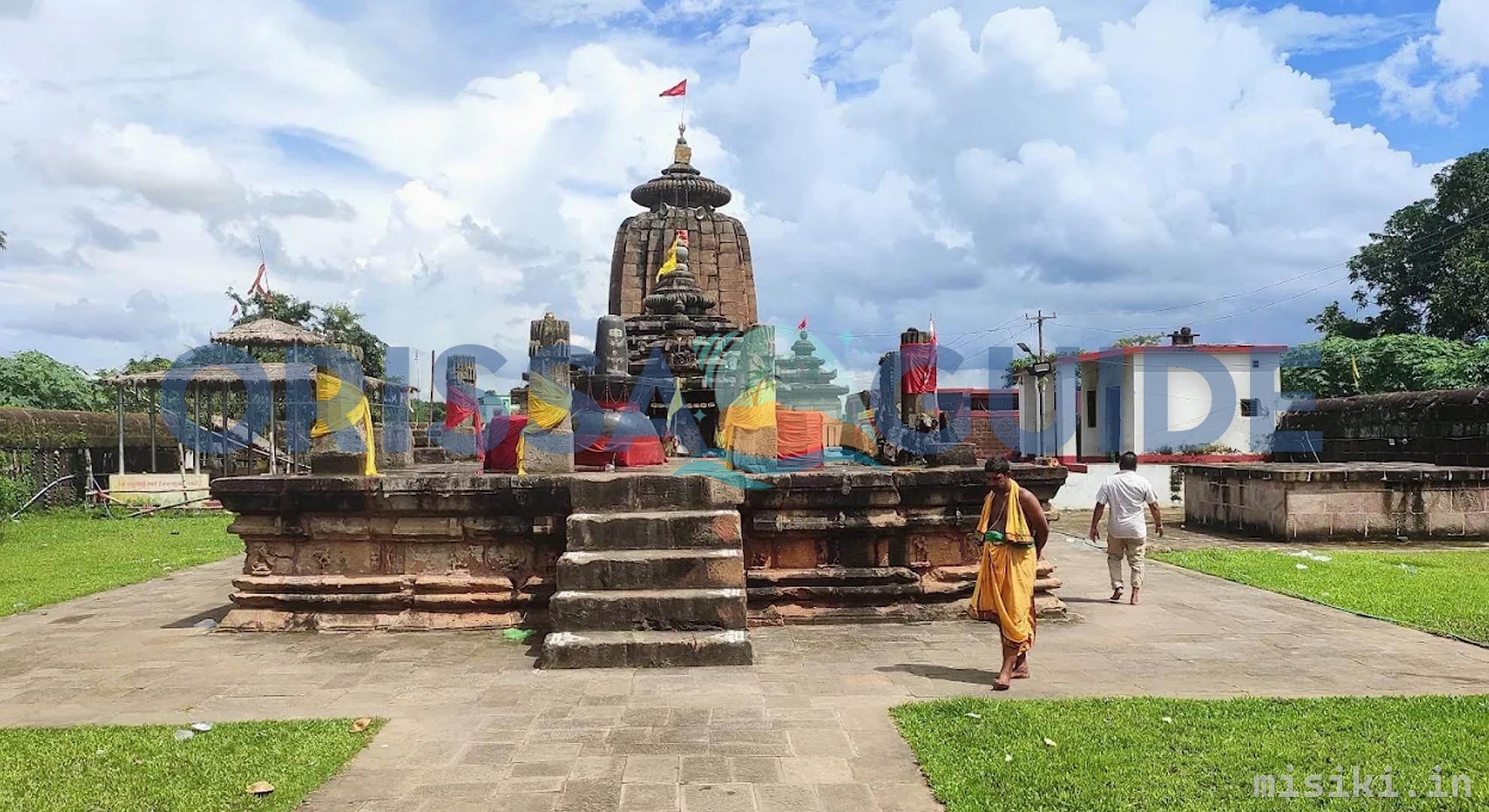
Sukutesvara Mandira Bhubaneswar: Timings, History and Local Guide (2026)
Quick Info
Timings: 6:00 AM to 12:00 PM and 4:00 PM to 9:00 PM (daily)
Entry Fee: Free
Best Time to Visit: Early morning between 6:30 AM and 8:00 AM, or during Shivaratri
Area: Old Town, Ekamra Kshetra, near Bindusagar Lake
Deity: Lord Shiva (Sukutesvara Linga)
Century: 16th century CE
Picture this. It is barely 7 in the morning. The air in Old Town Bhubaneswar still carries that cool, damp smell from last night's rain. You have just walked past the chai stall near Bindu Sagar, the one where the old man pours tea in that tall arc without spilling a drop. The lane narrows. Cycle bells ring somewhere behind you. A woman carrying a brass lota and fresh marigolds walks ahead with the certainty of someone who has done this a thousand times. You follow her. And then, half-hidden between old compound walls and a pipal tree whose roots have quietly cracked the footpath over decades, you see it. Sukutesvara Temple. No signboard. No crowd. Just the stone, the smell of incense, and Shiva, steady as always.
This is not a temple you stumble upon via a travel blog. This is a temple you find because someone in Bhubaneswar pointed you to it, or because you were walking the Ekamra Kshetra belt and your eyes caught something old and honest in the stonework.
Kimbadanti: The Legends and Folklore of Sukutesvara
In the old quarter of Bhubaneswar, every stone has a story. Sukutesvara Temple is no different. The name itself holds the key. "Sukuta" in Odia refers to the dried shrimp paste, a beloved ingredient in traditional Odia cooking, but scholars and local priests will tell you the connection here runs deeper, into folk memory and devotional legend.
According to one kimbadanti passed down through generations of Old Town families, this Shiva linga was originally worshipped by a poor fisherman community that lived along the banks of the Bindusagar. The story goes that a fisherman named Sukuta, who made a modest living selling dried fish in the weekly haat, had an unwavering faith in Lord Shiva. He had no gold, no silk, no sandalwood paste to offer. Every morning he would offer only the simple things his hands could provide: water from the sacred tank, a few wild flowers, and whatever small food he could spare.
One monsoon, a terrible storm destroyed the fishing boats and the entire community fell into hunger. Sukuta, it is said, sat before a rough stone under a pipal tree and prayed for three days without food or water. On the third day, the storm broke, the water cleared, and the catch was so abundant that every family in the neighbourhood ate well for weeks. The community believed Shiva had heard Sukuta's prayer and protected them. Out of gratitude, they consecrated the stone as a proper Shiva linga and built a small shrine around it. Over time, as the temple tradition of Ekamra Kshetra grew and wealthy merchants and kings patronised stone construction, the shrine was rebuilt in proper Kalinga style. The 16th century structure you see today is the result of that centuries-long devotion.
There is another version of the legend, told by the older women who come here on Monday mornings. They say that Sukutesvara is the form of Shiva who answers the prayers of the humble and the poor specifically. While the grand temples at Lingaraj and Mukteswar are for great occasions and public festivals, Sukutesvara is for the quiet prayer, the private grief, the small wish a person cannot say aloud anywhere else. This is why locals from the fishing and artisan communities have maintained a special relationship with this temple for generations. Even today you will mostly see ordinary Bhubaneswar families here, not tourist groups.
The temple also features in the oral tradition of the Ekamra Mahatmya, the Sanskrit text that catalogues the sacred sites of Bhubaneswar and their spiritual properties. Though the formal Mahatmya texts focus on the major Shiva lingas, local recitation traditions mention Sukutesvara among the secondary yet powerful shrines of the city, those that complete the spiritual map of Ekamra Kshetra.
Location and How to Reach
Sukutesvara Temple sits in the Old Town area of Bhubaneswar, in the heart of what the texts call Ekamra Kshetra. This is the original temple city, the part of Bhubaneswar that predates colonial layouts, that runs on narrow lanes, on the logic of temples and water tanks and bazaars rather than grids and main roads.
The easiest landmark to use is Bindusagar, the sacred tank at the geographical and spiritual centre of Old Town. From Bindusagar, take the western lane that runs parallel to the tank. Walk past the small row of flower sellers, past the point where the lane forks near an old well. Sukutesvara Temple is a short walk from here, tucked in a lane that branches off from the main temple cluster.
From Lingaraj Temple, it is roughly a 10 to 15 minute walk depending on how well you know the lanes. From the outer compound wall of Lingaraj, take the lane heading north-east. Ask any local for Sukutesvara Mandira and they will point you correctly.
If you are coming from the new city side, the most practical route is to take an auto to Old Town or Lingaraj. From Rajmahal Square auto stand it is about 15 to 20 minutes by auto and the fare is around 50 to 70 rupees depending on traffic. If you are using an app cab, drop your pin near Lingaraj Temple and walk from there. The lanes of Old Town are not always accessible by vehicle.
Parking is minimal. Two-wheelers can be parked near the lane entrance. Four-wheelers should park at the Lingaraj area parking and walk in. This is Old Town. Walking is the way.
Vibe and Atmosphere
Sukutesvara has the atmosphere of a lived-in temple. Not a museum, not a tourist attraction. A place that has been in use for centuries and still is, every single day.
The morning session is the best time. Between 6:30 and 8:00 AM the temple sees its most devoted visitors. Local residents from the surrounding mohallas come on foot, carrying coconuts wrapped in red cloth, fresh bel leaves from the market, small brass vessels of water from Bindusagar. The priest conducts abhishek and the sound of the bell and the chanting of the Shiva Panchakshara mantras fills the small sanctum. The smell of dhoopa and camphor mixes with the morning air. It is unhurried. Nobody is posing for photographs. Nobody is consulting Google Maps. This is just daily worship, as it has been for five hundred years.
The evening session has a different quality. After 4 PM, school children in uniforms sometimes pass through with their grandparents. Working people stop in on their way home. The light changes. The stone turns a warmer colour. The oil lamps inside the garbhagriha make the Shiva linga glow in a way that stone photographs cannot capture.
During Mahashivaratri the entire character of the place changes. The lanes fill up. Devotees come through the night. The queue, on that one night, is long and earnest and strangely joyful.
Peace of Mind and Spiritual Experience
If you need to sit quietly and think, the open space just outside the mandapa is your place. The pipal tree provides shade. The foot traffic is low compared to the major temples. There are no guides here pressing you to buy prasad or posing as priests. The actual pujari is a straightforward man who performs the rituals without theatrics.
For meditation, the best time is early morning before the main rush of visitors. The acoustics of the small sanctum, with chanting and the bell, produce a sound that is genuinely calming in a physical way. Stone temples of this type, built with thick walls and limited openings, naturally create a quiet that modern concrete buildings never achieve.
Who Should Visit and How to Enjoy It
For architecture enthusiasts, Sukutesvara is a study in 16th century Kalinga temple construction. The shikhara, though smaller than the major temples, shows the characteristic curvilinear form with amla and khapuri at the top. Look at the ground-level mouldings, the figures in the niches on the outer walls, and the doorway decorations. These are worth time and close examination.
For families with children, this is a good introduction to the Old Town temple circuit precisely because it is small and uncrowded. Children are not overwhelmed. The priest is patient.
For solo travellers, Sukutesvara offers what the famous temples cannot easily give: the experience of being the only outsider in a place of genuine daily religious life. No other tourist. Just you and the temple and the morning.
For photography, the exterior stonework in morning light is excellent. Photography inside the sanctum is generally not encouraged out of respect for the deity, so use your judgment and ask the priest first.
Belief and Local Significance
Among Old Town residents, Sukutesvara holds a specific function. This is the temple you visit when you have a personal difficulty you are not ready to discuss publicly. A health scare, a financial problem, a family tension. Locals believe that Sukutesvara Shiva is accessible in a particular way, that the deity here has a quality of directness, of hearing ordinary prayers without requiring elaborate ceremony.
Monday is the most important day for weekly worship. The first Monday of each month and all Mondays in the month of Shravana see higher attendance. Karthik Purnima is another important date.
Energy and Vibrations
There is a quality to old stone temples in Bhubaneswar that cannot be entirely explained by architecture or history. Sukutesvara has it strongly. The linga in the garbhagriha is dark, smooth, old. The floor of the sanctum is cool even in summer. The smell of centuries of incense and ghee has gone into the walls. Standing in front of the linga, most people go quiet without being asked. It is not the silence of obligation. It is something that just happens.
The energy here is not dramatic in the way of major pilgrimage temples. It is steady. Consistent. The kind of energy that a place accumulates over five hundred years of daily sincere prayer. If you are looking for spectacle, this is not your temple. If you are looking for something genuine, it is exactly the right place.
Comparison Table: Shiva Temples in Bhubaneswar Old Town
Name | Area | Entry Fee | Rating | Best For |
|---|---|---|---|---|
Lingaraj Temple | Old Town, Ekamra Kshetra | Free (Non-Hindus: viewing platform only) | 5/5 | Grand rituals, major festivals |
Sukutesvara Temple | Old Town, Ekamra Kshetra | Free | 4.3/5 | Quiet prayer, architecture study |
Mukteswar Temple | Old Town | Free | 4.7/5 | Architecture, sculpture detail |
Kedaresvara Temple | Old Town | Free | 4.2/5 | Solitude, early morning visit |
Rajarani Temple | Old Town fringe | Entry fee applies | 4.5/5 | Architecture, no active worship |
Frequently Asked Questions
What are the timings of Sukutesvara Temple Bhubaneswar? The temple is open from 6:00 AM to 12:00 PM in the morning and from 4:00 PM to 9:00 PM in the evening. These timings hold on regular days. On festival days like Mahashivaratri, the temple may stay open through the night.
Is there an entry fee for Sukutesvara Temple? No entry fee. The temple is free to enter for all devotees. You may choose to make a small offering or donation at the donation box inside, but there is no compulsion.
Can non-Hindus visit Sukutesvara Temple? Unlike Lingaraj Temple, which has formal restrictions, Sukutesvara is a smaller temple where the practice is more flexible. Non-Hindu visitors who are respectful and dressed appropriately can generally visit the outer areas and sometimes the mandapa. Always behave respectfully and follow the lead of the priest.
What is the best time to visit Sukutesvara Temple? Early morning between 6:30 AM and 8:00 AM is the best time. You will see genuine daily worship, the light is good for photography, and the temperature in Old Town at that hour is pleasant. Monday mornings are particularly auspicious.
How do I get to Sukutesvara Temple from Bhubaneswar Railway Station? From Bhubaneswar Railway Station, take an auto to Lingaraj Temple or Old Town area. The fare is roughly 60 to 80 rupees. From Lingaraj, walk the Old Town lanes or ask any local for Sukutesvara Mandira. Total travel time is about 25 to 30 minutes.
Is UPI payment accepted near the temple for offerings or nearby shops? Most of the flower sellers and prasad shops in Old Town now accept Google Pay and PhonePe. UPI is widely used in this area. For temple donations, the donation box takes cash only.
Where can I keep my footwear at Sukutesvara Temple? There is a small shoe stand or designated area near the temple entrance. You remove footwear before entering the temple compound. The shoe stand is managed informally, and a small tip of 5 to 10 rupees to the person watching it is the custom.
Is photography allowed inside Sukutesvara Temple? Photography of the exterior and the architecture is generally fine. Photography inside the garbhagriha where the main linga is installed is not encouraged. Ask the priest before taking any photographs inside the mandapa. Do not use flash.
Is there parking near Sukutesvara Temple? Dedicated parking does not exist at this temple. Two-wheelers can park at the lane entrance. Car users should park at the main Lingaraj Temple parking area and walk the lanes. Old Town roads are narrow and walking is far more practical here.
What should I wear when visiting Sukutesvara Temple? Dress modestly. Shoulders should be covered. Remove footwear before entering the compound. There is no formal dress code enforced, but traditional clothing or simple modest clothing is appropriate and respectful. Avoid shorts if possible.
Which festivals are celebrated at Sukutesvara Temple? Mahashivaratri is the biggest festival here and draws a large local crowd. Mondays in the Shravana month see regular increased worship. Karthik Purnima and Maha Shivaratri are the two dates when the temple is at its most active.
Is Sukutesvara Temple part of the Ekamra Kshetra temple circuit? Yes. Sukutesvara is one of the secondary Shiva temples in the broader Ekamra Kshetra sacred geography. If you are doing the full Old Town temple walk along the Bindusagar belt, Sukutesvara fits naturally into the route along with Mukteswar, Kedareswar, Uttaresvara, and others.
What is the significance of the name Sukutesvara? The name is understood locally as a compound referencing a devotee named Sukuta, from the fishing and artisan community, whose prayer is said to have established this shrine. The suffix "esvara" is a common Odia form of Ishvara, meaning lord or deity. So Sukutesvara means "the lord worshipped by Sukuta" or "the lord who heard Sukuta."
